
Signs of Dental Implant Failure: A Specialist Surgeon’s Perspective on Biological Stability
- Dr Samintharaj Kumar

- 6 days ago
- 11 min read
What if the most significant threat to your dental restoration isn't a sudden injury, but a quiet, biological shift you can't even feel? As a clinician and founder, I've seen many patients arrive at my practice with deep-seated anxiety that their investment is at risk. It's perfectly natural to worry about the signs of dental implant failure, especially when you've committed significant resources to your health and smile. You want to know if that slight sensation is normal healing or the start of a clinical complication.
In my clinical experience, the difference between losing an implant and saving one often comes down to early detection. From a biological perspective, your body provides subtle clues before a mechanical breakdown occurs. I'll help you identify these indicators through the lens of advanced clinical surgery, explaining how we use tools like AI-assisted diagnostics to track bone health with precision. You'll gain a clear framework for your maintenance routine and the confidence to know exactly when to consult a specialist surgeon for a biological audit. Understanding these subtle shifts is the first step toward ensuring the long-term success of your restoration.
Table of Contents
Understanding the Biological Mechanics of Dental Implant Failure
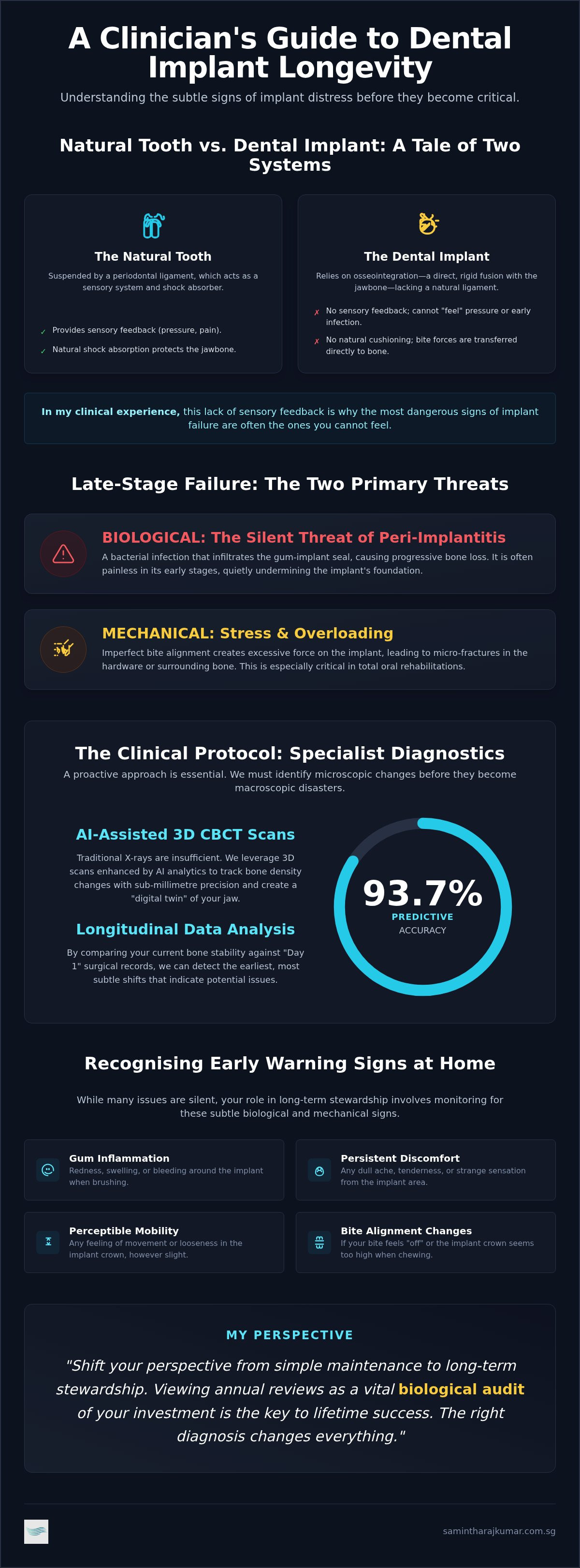
From a biological perspective, a dental implant is a marvel of bio-engineering, but it operates differently than a natural tooth. A natural tooth is suspended in the jawbone by the periodontal ligament, a complex mesh of fibres that acts as both a shock absorber and a sensory feedback system. Implants lack this ligament. Instead, they rely on a direct structural connection to the bone. This fundamental difference means that your implant won't "feel" the same way a tooth does. In my clinical experience, this lack of sensory feedback is why the most dangerous signs of dental implant failure are often the ones you cannot feel.
The bone-to-implant interface is a dynamic environment, not a static one. Understanding osseointegration failure requires recognising that bone is living tissue that constantly remodels itself. If this balance is disrupted, the implant can lose its stability. I distinguish between early-stage issues, where the bone fails to fuse with the titanium or ceramic surface, and late-stage failures, which often stem from biological infections or mechanical overloading after years of successful use. Constant monitoring is the only way to ensure this interface remains healthy over a lifetime.
The Silent Threat: Peri-Implantitis
Peri-implantitis is perhaps the most significant challenge we face in long-term implant stewardship. It occurs when bacteria infiltrate the seal between the gum and the implant. Unlike a cavity in a natural tooth, this process rarely causes immediate pain. As a clinician and founder, I've seen cases where progressive bone loss occurs silently, undermining the foundation of the restoration without the patient noticing a single symptom. Specialist detection is vital here. We must identify microscopic bone changes before they become macroscopic disasters that threaten the entire restoration.
Mechanical Stress and Total Oral Rehabilitation
Biological health is only half the story. Mechanical integrity is equally crucial, especially in complex cases involving All-on-4 dental implants. If the bite alignment isn't perfectly calibrated, the resulting mechanical stress can lead to micro-fractures in the hardware or even the surrounding bone. This is why regular adjustments to the prosthesis are essential. I view these reviews not just as check-ups, but as necessary recalibrations to ensure the structural integrity of your total oral rehabilitation remains intact for decades. The right diagnosis and alignment change everything.
The Clinical Protocol: Specialist Diagnostics for Early Detection
As a clinician and founder, I've seen that a standard visual inspection is never sufficient for complex implant cases. Relying on what the naked eye can see is a reactive approach that often misses the subtle onset of complications. My diagnostic protocol is proactive. It involves mapping the biological evolution of your jawbone over time to detect shifts before they become symptomatic. By utilising baseline surgical records, I compare your current stability against your "Day 1" results. This longitudinal data is essential for identifying the early signs of dental implant failure before they escalate into irreversible bone loss.
The right diagnosis at the microscopic level changes everything for long-term success. We aren't just looking for whether an implant is "still there". We are looking for the quality of the bone-to-metal or bone-to-ceramic bond. This level of detail requires a commitment to advanced technology and a refusal to settle for generalist standards of care.
AI-Assisted Imaging and 3D CBCT Scans
Traditional X-rays provide a flat, two-dimensional view that often masks underlying issues. In my practice, I leverage 3D CBCT scans enhanced by AI-driven analytics. These systems track bone density changes with sub-millimetre precision, allowing us to spot the "silent" bone resorption mentioned previously. Research from 2026 indicates that AI systems can now predict potential failure with an accuracy of approximately 93.7%. This technology is particularly critical for monitoring the health of zygomatic dental implants, where the structural load is distributed across different bone types. AI helps create a digital twin of your anatomy, making it easier to see if your biological environment is deviating from the success parameters outlined in this comprehensive review of implant failure risks.
Soft Tissue Integrity and Probing Depth
The "biological seal" of the gingiva around the implant neck is your first line of defence against infection. When I evaluate this area, I use specialised non-metallic instruments. It's vital to avoid scratching the implant surface, as even microscopic abrasions can become breeding grounds for bacteria. By tracking pocket depths and bleeding points, I can identify inflammation at its inception. If we catch these changes early, we can often reverse the trend through targeted clinical intervention. The best outcomes begin with understanding the root cause of these shifts through a professional biological audit.
Ceramic vs. Titanium: Material Science and Failure Resistance
In my clinical experience, the choice of material is a strategic decision that dictates the long-term biological success of a restoration. While titanium has historically been the gold standard, I have increasingly turned to ceramic dental implants for their superior biological response. From a biological perspective, the way the body interacts with zirconia is fundamentally different. This material choice is a proactive measure against the common signs of dental implant failure, specifically those rooted in bacterial infection and soft tissue recession.
A 2023 study on 1,828 ceramic implants reported a high overall survival rate of 98.69% over a 15-year period. This data is compelling when we examine the primary causes of dental implant failure, where peri-implantitis often acts as the catalyst for bone loss. Ceramic, or zirconia, is naturally resistant to the bacterial plaque that triggers this inflammation. Choosing a metal-free restorative foundation offers both aesthetic and functional advantages, particularly for patients who prioritise biocompatibility and a natural gum appearance.
The Zirconia Advantage in Plaque Resistance
The science behind zirconia’s success lies in its surface energy. Bacteria are less likely to adhere to ceramic surfaces compared to metal ones. In my clinical experience, this reduced bacterial load translates directly to lower rates of gum inflammation and a more stable "biological seal" around the implant neck. Ceramic is also the preferred choice for patients with known metal sensitivities; it eliminates the risk of a systemic inflammatory response. This biological compatibility is a cornerstone of my treatment philosophy for long-term health.
Monitoring Metal-Free Structural Stability
We monitor the health of white ceramic implants differently than their titanium counterparts. While zirconia is biologically superior, it has lower mechanical ductility, meaning we must be meticulous with bite alignment to prevent structural fractures. During clinical checks, I perform specific tests for the integrity of ceramic posts and ensure the long-term aesthetic harmony of the gum line. A ceramic foundation prevents the grayish discolouration sometimes seen with titanium, ensuring your smile remains natural. This meticulous monitoring is part of the lifelong partnership I establish with every patient.
Recognising Early Warning Signs of Implant Distress at Home
While my clinical audits are essential for long-term success, your daily observations are the first line of defence. As a clinician and founder, I encourage my patients to be mindful of subtle sensory changes in their mouth. You are the most frequent observer of your own biology. Recognising the early signs of dental implant failure allows for intervention that can often save an implant that would otherwise require removal. It is about knowing the difference between minor, temporary irritation and a potential surgical emergency.
In my clinical experience, early detection often transforms a complex problem into a manageable adjustment. From a biological perspective, your body will signal distress long before a mechanical failure occurs. If you notice a change, don't wait for your next scheduled review. The right diagnosis changes everything when it is delivered early enough to preserve the surrounding bone.
The Patient Sensory Checklist
I advise my patients to monitor their restorations using a structured sensory checklist. If you notice any of the following, it is time to seek a professional opinion:
Persistent Redness or Swelling: Any inflammation that does not resolve within 48 hours. While minor irritation can occur, persistent swelling suggests the biological seal around the implant has been breached.
Taste and Odour: A persistent metallic taste or foul breath. These are often indicators of bacterial activity deep within the gum pocket, which is a hallmark of early peri-implantitis.
Mechanical Feedback: Any sensation of movement or "clicking" when chewing or speaking. A healthy implant should feel as solid as your natural bone. Any mobility, however slight, is a significant red flag.
Systemic Factors and Risk Management
Your systemic health directly influences your implant's stability. Underlying conditions like uncontrolled blood sugar can impair the body's ability to maintain the bone-to-implant bond. I also frequently discuss the critical role of avoiding smoking in preventing facial collapse with dental implants. Smoking restricts blood flow to the bone and gingiva, which significantly increases the risk of both early and late-stage failure. If you are experiencing "slight discomfort" that feels deep-seated or throbbing, it warrants an immediate consultation. The best outcomes begin with understanding the root cause of these sensory shifts through a targeted biological audit.
My Perspective: The Philosophy of Long-Term Implant Stewardship
In my clinical experience, the most successful restorations aren't defined by the surgery itself, but by the years of stable function that follow. Total rehabilitation is a journey that only begins on the day of surgery. As a clinician and founder, I've always believed that our responsibility to the patient extends far beyond the operating theatre. I believe in building institutions like Nuffield Dental that prioritise the patient journey over decades, not just months. This philosophy of stewardship is what distinguishes a specialist practice from a generalist one.
The best outcomes begin with understanding the root cause of any clinical change. Whether we are looking at the health of the bone or the integrity of the soft tissue, we must be proactive. By identifying the early signs of dental implant failure, we can intervene with precision and care. This approach ensures that your investment in your health remains secure for a lifetime. I view every annual review not as a chore, but as a vital biological audit of a life-changing investment.
The Surgeon-Patient Partnership
I personally oversee the annual reviews for my complex cases because I believe there is immense value in a specialist who understands every nuance of your surgical placement. I know exactly where the bone was densest and how the implant was angled during the initial procedure. This intimate knowledge, combined with our commitment to utilising global standards in biological dentistry, allows us to provide a level of care that is truly personalised. We don't just look at a scan; we look at the biological evolution of your unique anatomy to ensure long-term harmony.
Future-Proofing Your Restoration
The future of implantology is incredibly bright. As we move through 2026, AI and digital monitoring are becoming even more integrated into our daily workflows. These tools will further simplify implant care, allowing us to track your restoration with unprecedented detail and catch microscopic shifts before they manifest as symptoms. However, technology is only as effective as the clinician behind it. The role of continuous education is vital in maintaining a world-class clinical standard. This commitment to innovation is how we future-proof your smile against the traditional risks of failure.
Investing in maintenance is the ultimate insurance for your smile. It allows us to protect the structural and biological integrity of your restoration. The right diagnosis changes everything. The best outcomes begin with understanding the root cause of every shift in your oral health.
Securing the Future of Your Restorative Health
As a clinician and founder, I view your dental restoration as a lifelong commitment to your well-being. We've explored how identifying the subtle signs of dental implant failure early is the key to preserving your biological foundation. From the plaque-resistant properties of ceramic implants to the precision of AI-assisted diagnostics, modern medicine provides us with the tools to protect your investment. My philosophy remains rooted in a partnership where we monitor the evolution of your oral health together through specialist surgeon-led consultations.
True success is measured in decades of comfortable, confident function. By embracing global standards in ceramic and zygomatic implantology, we ensure that every intervention is precise and purposeful. Our advanced AI-assisted diagnostic protocols allow us to see what the naked eye cannot, providing a level of security that generalist practices simply cannot match. The best outcomes begin with understanding the root cause of any clinical change. Explore our approach to total oral rehabilitation and take the first step toward enduring stability. Your journey to a renewed sense of self is a path I'm honoured to walk alongside you.
Frequently Asked Questions
How often should I have my dental implants checked by a specialist?
I recommend an annual specialist review as a biological audit of your investment. While your home routine is vital, these visits allow me to use AI-assisted imaging to track bone density changes with sub-millimetre precision. We compare current stability against your baseline records from the day of surgery. This proactive approach identifies the earliest signs of dental implant failure before they manifest as pain or visible swelling.
Can a failing dental implant be saved without surgery?
In my clinical experience, early-stage distress can often be reversed without invasive procedures. If we detect peri-implant mucositis, which is inflammation limited to the soft tissue, we use targeted decontamination and specialist hygiene protocols to restore health. However, once bone loss begins, surgical intervention is typically required to save the foundation. The best outcomes begin with understanding the root cause early through diagnostic mapping rather than waiting for symptoms.
Is it normal for a dental implant to feel slightly loose after several years?
It is never normal for a dental implant to feel loose. Unlike natural teeth, which have a periodontal ligament that allows for slight physiological movement, an implant should be fused directly to your jawbone. Any sensation of mobility or "clicking" is a critical indicator of a breakdown in osseointegration or a mechanical issue with the prosthesis. If you notice movement, it requires an immediate specialist consultation to prevent total failure.
Do ceramic implants have a lower failure rate than titanium ones?
Recent 2026 data indicates that titanium implants have a 96% survival rate at five years, while zirconia (ceramic) implants sit at 94%. However, a long-term 15-year study on ceramic implants reported a high survival rate of 98.69%. While ceramic is naturally resistant to the plaque that causes peri-implantitis, it requires meticulous mechanical alignment. I often prefer ceramic for its superior biological response and aesthetic harmony with the gum line.
What is the difference between a general dentist checkup and a specialist implant review?
A general dentist focuses on overall oral hygiene, but a specialist review is a deep biological audit of the implant interface. As a clinician and founder, I use AI-assisted diagnostics to detect microscopic bone changes that traditional X-rays miss. We evaluate the "biological seal" of the gingiva and use non-metallic instruments to avoid surface abrasions. This level of scrutiny is essential for detecting the subtle signs of dental implant failure.
Can peri-implantitis be treated if it is caught early?
Peri-implantitis can be successfully managed if identified in its early stages. My protocol involves decontaminating the implant surface and, in some cases, using regenerative techniques to restore lost bone foundation. The challenge is that this condition is often painless, which is why I emphasise regular 3D imaging. Catching bone loss at the microscopic level allows us to intervene before the structural integrity of the restoration is permanently compromised.
Will my dental insurance cover the cost of an annual implant audit?
Coverage varies significantly between providers and specific policy tiers. I recommend contacting your insurer to verify if they include "specialist reviews" or "diagnostic imaging" in your plan. While I cannot confirm individual coverage, many patients find that their insurance supports preventative audits as part of long-term maintenance. Investing in these reviews acts as insurance for your smile, preventing more costly and complex revisions in the future.
Are there specific foods I should avoid to prevent implant failure?
I advise avoiding excessively hard foods, such as ice or hard sweets, which can cause mechanical stress or micro-fractures in the prosthesis. Sticky foods can also pull at the restorative hardware. From a biological perspective, maintaining stable blood sugar through a balanced diet is equally important for bone health. Your nutrition supports the dynamic bone-to-implant interface, ensuring the long-term stability of your total oral rehabilitation and overall well-being.


Comments