
Signs of Dental Implant Failure: A Specialist Surgeon’s Perspective on Early Detection and Recovery

A dental implant that feels even slightly unstable isn't just a minor clinical hurdle; it's a profound biological signal that requires immediate, specialist attention. I know how distressing it is to feel persistent discomfort or see unexpected swelling around a restoration you expected to last a lifetime. It's perfectly natural to worry about the loss of such a significant financial and personal investment, especially when you're unsure if what you're feeling is part of the normal healing process. My goal is to help you recognise the early signs of dental implant failure before they escalate into more complex systemic issues.
In my clinical experience as a surgeon and founder, I've found that the right diagnosis changes everything. I'll guide you through the subtle indicators of complications and the precise protocols we employ to salvage and restore your smile. We'll examine why these failures occur from a biological perspective and provide a clear roadmap for total oral rehabilitation. You'll gain the clarity needed to move from a state of uncertainty to a position of informed confidence. Specialist intervention can turn a setback into a successful journey toward functional excellence and renewed well-being.
Table of Contents
Understanding Dental Implant Failure: Biological vs. Mechanical Breakdown
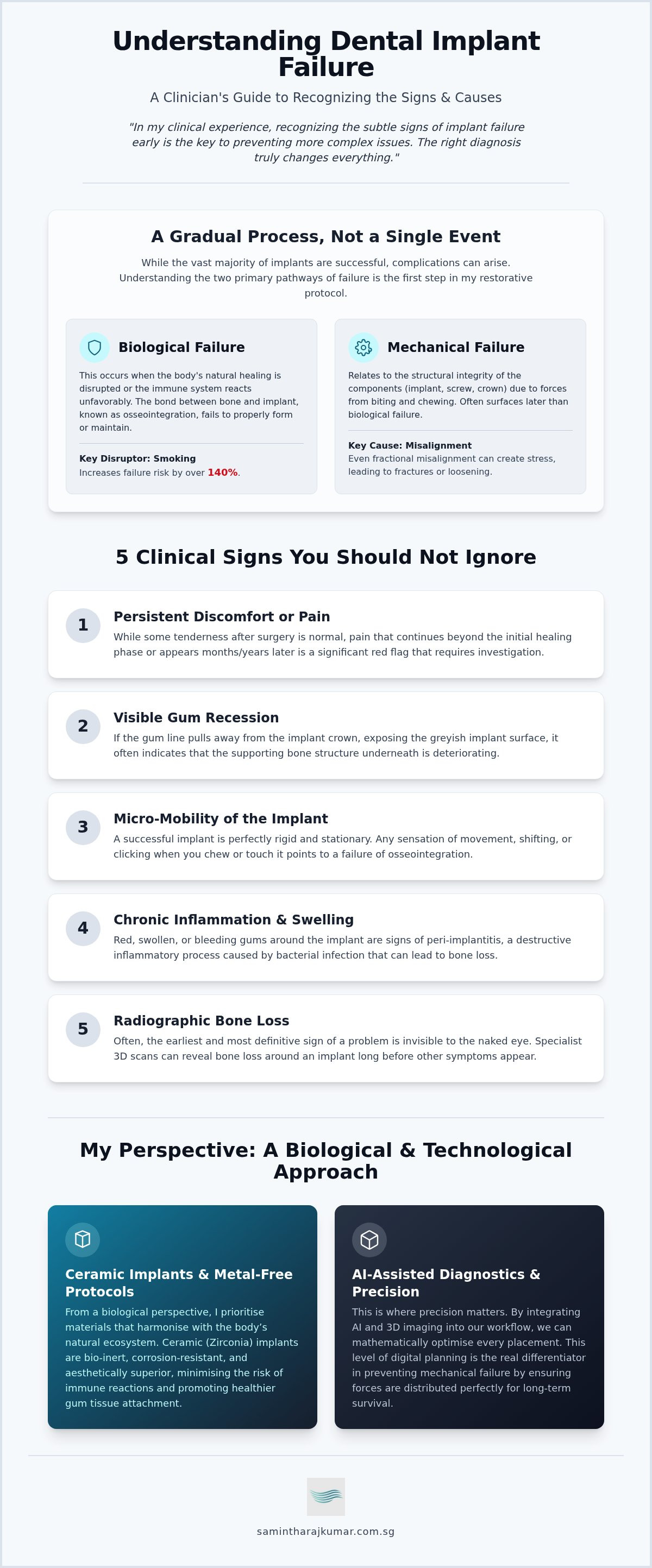
In my clinical experience, failure is rarely a single, catastrophic event but rather a gradual process that begins beneath the surface. What many patients don't realise is that a stable implant relies on a continuous, dynamic relationship between the living tissue and the surgical fixture. When this relationship falters, we see the early signs of dental implant failure. While the vast majority of cases are successful, a 2025 study of nearly 160,000 implants found that roughly 2.21% of cases encounter complications. This highlights the importance of vigilance during the first few years of restoration.
To address these issues effectively, we must distinguish between biological and mechanical breakdown. Biological failure occurs when the body's natural healing mechanisms are interrupted or the immune system reacts unfavourably to the site. Mechanical failure relates to the structural integrity of the prosthetic components, such as the screw or the crown. Identifying which pathway is at play is the first step in my restorative protocol. To better understand this concept, watch this helpful video:
The Science of Osseointegration
Osseointegration is the structural and functional connection between living bone and the surface of a load-bearing artificial implant. This intricate biological process of osseointegration begins the moment the implant is placed. Whether we use titanium or my preferred ceramic surfaces, the jawbone must heal around the fixture at a cellular level. Factors such as smoking, which increases failure risk by over 140%, or uncontrolled systemic health issues can disrupt this bond. This often leads to what we call "early failure" during the initial healing phase before the final crown is even attached.
Mechanical Integrity and Loading
Mechanical failure often surfaces later, frequently linked to how the implant handles the forces of biting and chewing. This is where precision matters. In protocols like "Teeth in a Day," we must be exceptionally meticulous about immediate loading. If the structural alignment is off by even a fraction of a millimetre, the resulting stress can lead to screw loosening or structural fractures. As a clinician and founder, I've integrated AI-assisted diagnostics into our workflow to ensure that every placement is mathematically optimised for long-term survival. This level of digital precision is the real differentiator in preventing signs of dental implant failure caused by uneven mechanical stress.
5 Clinical Signs of Dental Implant Failure You Should Not Ignore
Many patients believe that pain is the only indicator of a problem. In my clinical experience, however, the most dangerous signs of dental implant failure are often the quietest. Identifying these issues early requires a specialist's understanding of how oral tissues respond to artificial fixtures over time. The signs of dental implant failure can vary significantly between individuals, making professional oversight mandatory for long-term success.
Persistent discomfort: While some tenderness is normal immediately after surgery, pain that lingers beyond the initial healing phase or develops months later is a significant red flag.
Visible gum recession: If you notice the gum line pulling away or can see the greyish threads of the implant, the underlying bone may be retreating.
Micro-mobility: An implant must remain perfectly stationary. Any sensation of movement or clicking when you chew or speak suggests a loss of the biological bond.
Chronic inflammation: Peri-implantitis manifests as red, swollen, or bleeding gums around the site, often caused by bacterial infiltration.
Radiographic bone loss: During a specialist consultation, I often find bone loss on a 3D scan that isn't yet visible to the naked eye.
Acute vs. Subtle Symptoms
I often tell my patients that a "dull ache" is frequently more concerning than sharp, temporary pain. Sharp pain usually relates to immediate healing or minor tissue irritation. A persistent, deep-seated ache suggests that the osseointegration process is being compromised by infection or mechanical stress. This is why I insist on strict annual checkup standards for dental implants. Regular monitoring allows me to intervene at the first sign of trouble, potentially saving a significant health investment before it becomes a total loss.
The Role of Peri-implantitis
This condition is essentially the implant equivalent of severe gum disease. Bacteria settle in the microscopic space where the gum meets the implant, leading to a chronic inflammatory response that erodes the supporting bone. What many don't realise is that this process can be entirely painless until the implant is on the verge of falling out. Early intervention through specialist cleaning or regenerative protocols is the only way to arrest this decline. A detailed clinical evaluation can determine if your implant environment remains healthy, stable, and functionally sound.
Why Implants Fail: The Role of Biological Compatibility
From a biological perspective, we aren't just placing a medical device; we're integrating a foreign object into a complex, living ecosystem. My philosophy has always been that the materials we use must harmonise with your unique physiology to ensure long-term success. When this harmony is disrupted, the body begins to retreat, leading to the clinical signs of dental implant failure that I've seen in many rescue cases. Understanding why this happens requires looking beyond the jawbone and into your overall systemic health and lifestyle.
Systemic Health and Bone Density
I never view a patient as just a set of teeth. I evaluate your entire medical profile because conditions like uncontrolled diabetes, osteoporosis, or autoimmune disorders directly impact how bone heals and regenerates. Smoking remains one of the most significant lifestyle risks I encounter. It constricts the micro-vasculature in the gums, effectively starving the healing site of the oxygen and nutrients required for osseointegration. If we detect insufficient bone volume during our digital diagnostics, I often perform sinus lift surgery for dental implants to build a lasting foundation. This proactive approach ensures we aren't just placing an implant, but creating a stable environment where it can thrive for decades.
Biocompatibility and Material Choice
The clinical shift toward ceramic dental implants represents a major advancement in biological dentistry. While titanium is the traditional standard, what many patients don't realise is that some individuals have subtle metal sensitivities. These sensitivities can trigger a chronic immune response, leading to unexplained inflammation and bone loss. Zirconia implants are entirely metal-free and highly biocompatible, meaning the body is far less likely to view them as a threat.
Functionally, Zirconia surfaces also tend to attract less bacterial plaque than titanium, which is a critical differentiator in preventing the onset of peri-implantitis. By following advanced protocols for material selection and surgical precision, we can offer solutions that are as aesthetically pleasing as they are biologically sound. Precision in planning determines longevity, and choosing the right material is the first step in that journey. The future of healthcare lies in these better, more personalised decisions that respect the body's natural boundaries.
My Perspective: Why I Advocate for Ceramic Implants and Advanced Protocols
As a clinician and founder, I've spent decades observing how the human body interacts with medical interventions. My philosophy has always been to treat the mouth as an integral part of a whole-body ecosystem rather than an isolated set of teeth. This biological perspective is what drives our move toward metal-free solutions and advanced surgical salvage. We don't just want an implant to stay in the bone; we want the surrounding tissues to thrive. This is where the real differentiator lies in preventing the early signs of dental implant failure.
Innovation in Implant Materials
Ceramic implants are far more than an aesthetic choice. While titanium remains a global standard, ceramic options offer a superior soft-tissue response that is difficult to ignore. The gingiva tends to attach more comfortably to zirconia, creating a tight biological seal that protects the underlying bone from bacterial infiltration. By choosing ceramic dental implants, we reduce the risk of the chronic inflammation often seen with metal components. This metal-free approach is redefining success rates for patients with sensitivities, ensuring their restoration remains a healthy part of their anatomy for the long term.
Rescuing the "Failed" Case
What happens when a patient arrives already experiencing the devastating signs of dental implant failure? This is where my expertise in complex oral surgery becomes vital. For cases with severe bone loss where traditional methods have failed, I often turn to Zygomatic and Pterygoid implants. These advanced protocols allow us to anchor the restoration into the stable, cortical bone of the cheek or the back of the jaw, bypassing the need for extensive grafting in compromised sites.
Using All-on-4 dental implants, we can restore full-mouth function even in scenarios previously deemed "hopeless." The right diagnosis changes everything. Instead of simply replacing a failed screw, we rehabilitate the entire oral environment to prevent future breakdown. If you are concerned about the stability of a previous procedure, a comprehensive clinical assessment is the first step toward reclaiming your oral health. Precision in planning determines longevity, and we are committed to providing the most advanced surgical salvage options available globally.
Beyond the Diagnosis: Restoring Your Smile Through Total Rehabilitation
Once we've identified the signs of dental implant failure, the conversation shifts from apprehension to action. In my clinical experience, the most successful recoveries aren't just about replacing a fixture; they're about correcting the environment that allowed the failure to occur in the first place. This process begins with a meticulous clinical assessment using high-resolution 3D imaging. These digital diagnostics allow me to see exactly where the bone has receded and where the biological seal was compromised. Before any new surgery takes place, we must stabilise the site by treating active infections and managing the surrounding soft tissue to ensure a healthy foundation.
Surgical intervention in these cases is highly personalised. Depending on the extent of the breakdown, I may need to remove the failing implant, augment the site with advanced bone grafting, or utilise regenerative protocols like PRF (Platelet-Rich Fibrin) to accelerate healing. My goal is always to move beyond the immediate crisis and toward a state of functional excellence and long-term well-being. What many patients don't realise is that even a failed case can be salvaged with the right specialist expertise and a commitment to biological principles.
The Clinical Path to Recovery
For patients facing a total rehabilitation, the teeth in a day procedure offers a transformative restorative option. This protocol allows us to provide a fixed, functional set of teeth in a single visit, which is particularly beneficial for those who have suffered the psychological impact of a failing restoration. We use tissue engineering and precise bone grafting to rebuild the foundation, ensuring the new implants are anchored in healthy, dense bone. During the integration phase, I work closely with my patients to monitor their progress, ensuring that the new biological bond is stronger and more resilient than the last.
A Vision for Functional Aesthetics
The long-term impact of a successful restoration extends far beyond the ability to chew. I often focus on preventing facial collapse with dental implants, as the underlying bone structure is what maintains your natural facial harmony and youthful appearance. When an implant fails and bone is lost, the face can begin to lose its structural support, leading to premature ageing. By restoring this foundation, we aren't just fixing a smile; we're performing a form of structural rejuvenation that has a profound personal impact on confidence and quality of life.
The best outcomes begin with understanding the root cause. Whether the initial issues were biological or mechanical, my philosophy is to ensure your next restoration is built to last a lifetime. Precision in planning determines longevity, and the right diagnosis changes everything.
A Future Defined by Precision and Restoration
Recognising the early signs of dental implant failure is the first step toward safeguarding your health and your investment. In my clinical experience, a setback doesn't have to be the end of your journey. By understanding the distinction between biological and mechanical breakdown, we can apply advanced protocols to rescue even the most complex cases. My philosophy as a clinician and founder has always been to prioritise biocompatible materials like ceramic implants and innovative salvage techniques, such as Zygomatic or All-on-4 systems, to restore functional excellence.
I believe that the future of healthcare lies in earlier detection and better, more personalised decisions. We don't just aim for implant survival; we strive for a total rehabilitation that preserves your facial harmony and long-term quality of life. My team and I are dedicated to providing a higher tier of specialised expertise rooted in global standards and compassionate, patient-centred care.
The right diagnosis changes everything. Begin your journey toward total oral rehabilitation with a specialist consultation.
Your smile is a legacy of your well-being, and it deserves the meticulous attention of experienced hands. Trust that with the right intervention, a secure and functional future is well within reach.
Frequently Asked Questions
Is it normal for a dental implant to feel slightly loose?
No, a dental implant should never feel loose. Stability is the hallmark of successful osseointegration, where the bone has fused perfectly with the surgical fixture. Any sensation of movement, even if it's subtle, is one of the definitive signs of dental implant failure. This micro-mobility usually indicates that the biological bond has been compromised. If you experience this, you must seek a specialist consultation immediately to determine if the implant can be saved.
Can a failing dental implant be saved without being removed?
Yes, a failing implant can sometimes be salvaged if we intervene during the early stages of inflammation. If the issue is peri-implantitis without significant bone loss, I use advanced protocols like specialised cleaning, ozone therapy, or PRF to stabilise the environment. However, if the implant has lost its structural connection to the bone, removal and site augmentation are usually necessary. The right diagnosis at the first sign of trouble is vital for a successful rescue.
What are the first signs of peri-implantitis I should look for?
The earliest indicators of peri-implantitis are often subtle changes in the soft tissue surrounding the restoration. You should look for persistent redness, swelling, or bleeding when brushing, which is similar to traditional gum disease. While these symptoms are often painless, they signal that bacteria are infiltrating the space between the gum and the fixture. Early detection allows us to arrest the infection before it leads to irreversible bone loss and eventual clinical failure.
Does smoking always lead to dental implant failure?
Smoking doesn't guarantee failure, but it significantly compromises the healing process. Research indicates that smokers face a failure risk approximately 140.2% higher than non-smokers. Nicotine constricts the blood vessels, reducing the essential oxygen and nutrient flow to the jawbone. This makes it much harder for the body to achieve successful osseointegration. As a clinician, I strongly advise patients to cease smoking to protect their health investment and ensure the long-term stability of their smile.
How long does it take for a dental implant to fail after surgery?
Failure can occur at two distinct stages. Early failure typically happens within the first few months, often during the initial osseointegration phase before the crown is attached. Data shows about 1.56% of implants fail during this window. Late failure can occur years after successful integration, usually triggered by peri-implantitis or mechanical stress. Regular monitoring through annual checkups is the most effective way to identify these delayed complications before they become a total loss.
Are ceramic implants less likely to fail than titanium ones?
Ceramic implants offer specific biological advantages, particularly for patients with metal sensitivities. While titanium remains a global standard, ceramic surfaces tend to attract less bacterial plaque and promote a healthier soft-tissue response. This can reduce the risk of peri-implantitis in certain patient profiles. In my clinical experience, the choice between materials depends on your unique physiology, but ceramic options are a visionary solution for those seeking a metal-free, highly biocompatible and functional restoration.
What is the success rate of replacing a failed dental implant?
Replacing a failed implant is a highly successful procedure when performed with specialist expertise. While the success rate for a second attempt can be slightly lower than the initial 95% to 98% range, we often achieve excellent outcomes by rebuilding the foundation first. This usually involves bone grafting or tissue engineering to restore the site. My focus is on understanding the root cause of the first failure to ensure the second restoration lasts a lifetime.
Can an autoimmune disease cause my body to reject an implant?
Autoimmune conditions can influence how your body responds to a dental implant. While "rejection" isn't a traditional allergic reaction, an overactive immune system can interfere with the delicate cellular process of bone healing. Conditions like lupus or rheumatoid arthritis may heighten the risk of chronic inflammation. I evaluate each patient's systemic health profile meticulously to determine if biological dentistry protocols or specific material choices, like ceramic implants, are more appropriate for your long-term well-being.


Comments