
TMJ Splint vs Night Guard: A Surgeon’s Perspective on Jaw Rehabilitation (2026)

Could the very device intended to save your teeth actually be exacerbating your jaw dysfunction? In my clinical experience, many patients arrive at my practice feeling disillusioned after using a generic mouthguard that failed to resolve their chronic clicking or morning headaches. While a standard guard acts as a passive barrier against tooth wear, it often ignores the underlying structural mechanics of the temporomandibular joint. Understanding the nuance of a tmj splint vs night guard is not merely about choosing a dental accessory; it's about selecting a therapeutic pathway that addresses the root cause of your discomfort rather than just the symptoms.
I recognise the exhaustion that comes with chronic facial fatigue and the confusion surrounding the significant price differences between these oral appliances. My promise is to provide you with the clinical clarity required to restore your jaw function and protect your facial symmetry. From a biological perspective, we'll explore why a night guard protects your teeth from your jaw, while a therapeutic splint protects your joint from your bite. This guide will outline the diagnostic journey necessary to ensure your long-term health, moving beyond temporary fixes toward comprehensive functional excellence.
Table of Contents
The Fundamental Distinction: Protection vs. Treatment
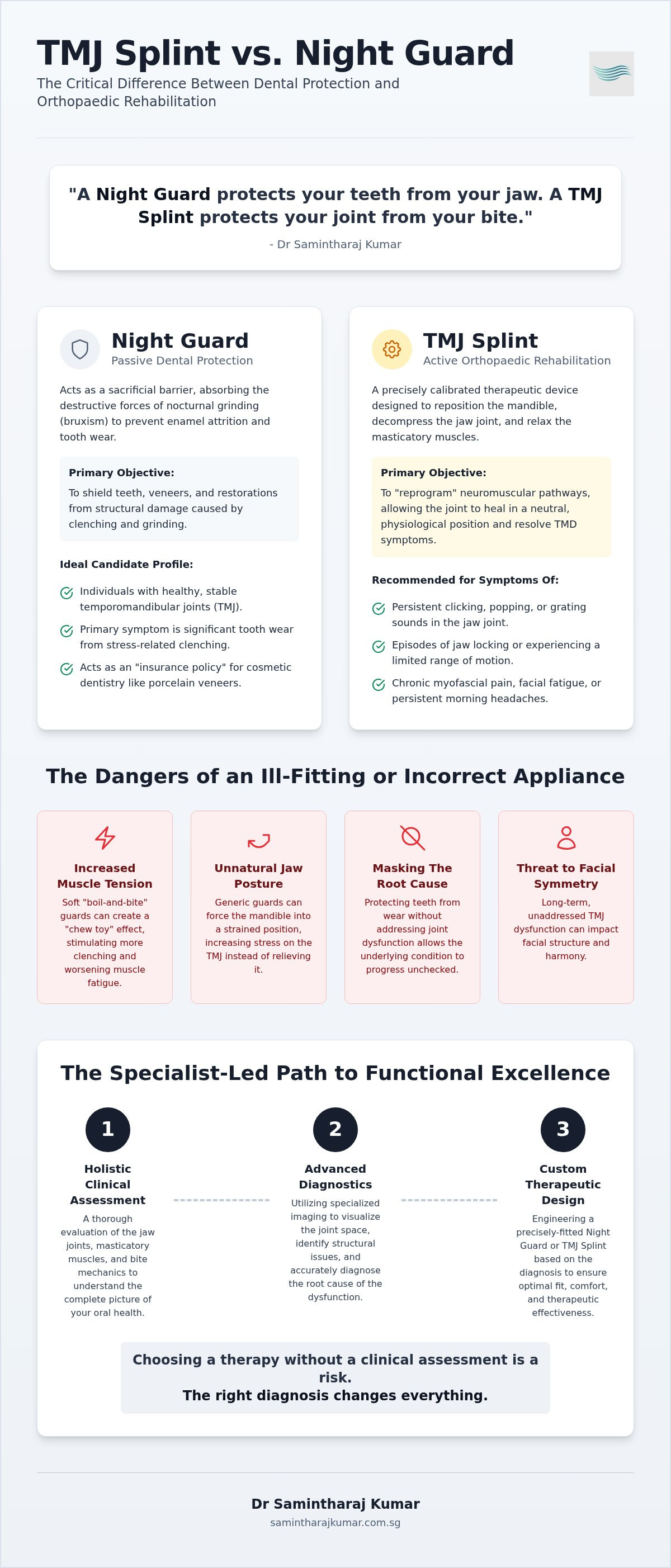
In my clinical experience, the confusion surrounding a tmj splint vs night guard often stems from a misunderstanding of their primary objectives. One is a shield; the other is a tool for rehabilitation. From a biological perspective, a night guard is a passive barrier designed to prevent enamel attrition by acting as a sacrificial layer between your upper and lower teeth. Conversely, a TMJ splint is an active therapeutic device. It's an orthopaedic tool engineered to reposition the mandible and decompress the joint space.
I've seen many individuals suffer unnecessarily because they're using a protective tool to solve a structural, mechanical problem. While a night guard might stop you from grinding your teeth down to the dentine, it does nothing to address the underlying Temporomandibular joint dysfunction that often drives the grinding. This is why a specialist diagnosis is the prerequisite for any oral appliance. We must determine whether we're protecting your teeth or rehabilitating your jaw system.
When Protection is Enough: The Role of the Night Guard
A night guard's primary function is to absorb the destructive forces of nocturnal bruxism. It's essentially a shock absorber for your smile. These devices are typically made from soft, hybrid, or hard acrylics, with a heavy focus on durability and patient comfort. The ideal candidate for a night guard is someone with healthy, stable joints who simply exhibits significant tooth wear from stress-related clenching. It protects the enamel, but it doesn't change how your jaw sits or how your muscles fire.
When Treatment is Required: The Role of the TMJ Splint
When the issue moves beyond the teeth and into the joint itself, we turn to the TMJ splint. Its primary function is decompressing the jaw joint and relaxing the masticatory muscles. Unlike a standard guard, a splint is precisely calibrated to the patient’s ideal "centric relation." It's designed to "reprogram" the neuromuscular pathways and allow the joint to heal in a neutral, physiological position. I recommend this therapeutic approach for patients experiencing:
Persistent clicking, popping, or grating sounds in the jaw.
Episodes of the jaw locking or limited range of motion.
Chronic myofascial pain, facial fatigue, or morning headaches.
Choosing between a tmj splint vs night guard without a clinical assessment is a risk to your long-term facial harmony. The right diagnosis changes everything.
The Science of Night Guards: Shielding Your Smile
In my clinical experience, night guards serve a vital but fundamentally limited role as a sacrificial layer for your smile. They are designed to take the brunt of nocturnal grinding forces so that your natural dentition remains intact. Without this barrier, the constant friction of bruxism leads to enamel attrition, flattened cusps, and increased tooth sensitivity. By wearing a guard, you ensure that the plastic wears down instead of your biological tissue. This is a critical distinction when weighing a tmj splint vs night guard; one protects the hardware, while the other addresses the software of the jaw.
I frequently see the clinical fallout of over-the-counter "boil and bite" guards. While they are accessible, their bulky and imprecise fit often forces the mandible into an unnatural posture. This poor alignment actually increases muscle activity and exacerbates jaw tension rather than relieving it. Precisely engineered custom-fitted guards distribute the occlusal load evenly across the entire dental arch to prevent tooth fracture and structural failure. If you have previously invested in cosmetic dentistry singapore, a custom guard acts as an essential insurance policy to preserve the integrity of porcelain veneers or composite restorations against the sheer force of clenching.
Material Matters: Hard vs. Soft Guards
I rarely recommend soft guards for chronic clenchers because of what I call the "chew toy" effect. From a biological perspective, the squishy texture of a soft guard can actually stimulate the brain to clench and chew more aggressively during sleep. This increases the workload on your masticatory muscles and can lead to significant morning fatigue. Hard acrylic guards are the gold standard for heavy bruxers. These devices provide a stable, slippery surface that allows the teeth to glide freely, which helps to quieten the neuromuscular system. Custom-milled hard guards also ensure long-term periodontal health by preventing the teeth from shifting under pressure.
Limitations of Passive Protection
It's vital to understand that a night guard cannot "cure" jaw clicking or chronic TMJ disorders - Diagnosis and treatment. While they are excellent at preventing tooth wear, they are often merely a temporary "band-aid" for a deeper structural issue. Ignoring underlying joint inflammation or disc displacement while only protecting the teeth can allow a degenerative condition to progress. When the problem is mechanical, a passive guard is rarely enough. The best outcomes begin with understanding the root cause of your discomfort.
Therapeutic TMJ Splints: Reprogramming the System
From a biological perspective, splints serve as a sophisticated orthopaedic repositioning tool rather than a simple dental barrier. While a night guard is a passive device, a therapeutic splint is designed to actively intervene in the mechanical relationship between the mandible and the skull. In my clinical experience, this is the most critical distinction in the tmj splint vs night guard debate. A splint "reprograms" the neuromuscular pathways of the jaw by providing a new, stable biting surface that bypasses existing dental interferences. This allows the brain to release the muscle guarding patterns that often drive chronic pain.
I consider these appliances a vital component of total jaw rehabilitation. Unlike generic guards, splints require regular clinical adjustments to remain effective. As the inflammation in the joint subsides and the muscles relax, the jaw's position will naturally shift. We must meticulously recalibrate the appliance during follow-up visits to ensure the condyle remains in its optimal healing position. This dynamic process is supported by a scientific study on splint vs. night guard therapy, which highlights how active stabilisation leads to superior functional outcomes compared to passive protection alone.
Types of Clinical Splints: Stabilisation vs. Repositioning
We typically categorise therapeutic appliances based on their specific clinical objective. Stabilisation splints, often referred to as Michigan splints, are designed to reduce muscle activity and protect the joint from excessive loading. They provide a flat, even surface where all teeth meet simultaneously, which helps to "de-programme" hyperactive muscles. Alternatively, Mandibular Advancement Splints are utilised when the articular disc is displaced or when treating sleep apnoea. These devices precisely position the lower jaw forward to maintain an open airway or to encourage the disc to return to its proper place. Achieving this requires extreme precision in bite registration and clinical fitting.
The Biological Impact on the Joint
The primary goal of splint therapy is to reduce intra-articular pressure within the joint capsule. By creating a small amount of space, we allow the synovial fluid to circulate more freely, which nourishes the joint cartilage and flushes out inflammatory markers. A precisely calibrated splint allows the masticatory muscles to reach a state of "physiologic rest" by eliminating the need for constant compensatory movements. Over time, this shifts the patient's experience from acute pain to long-term functional stability. True restoration is not just about the teeth; it's about the harmony of the entire masticatory system.
Structural Consequences: Why the Wrong Choice Matters
In my clinical experience, the structural integrity of the lower third of the face is entirely dependent on the stability of the temporomandibular joint. When patients debate the merits of a tmj splint vs night guard, they often overlook the profound impact these devices have on facial aesthetics. A collapsed bite or a misaligned jaw doesn't just cause pain. It leads to premature facial ageing by reducing the vertical height of the face, which causes the soft tissues to sag and folds to deepen around the mouth. I've observed how how dental structure affects face shape, and the jaw joint is the foundation of this structural rejuvenation.
Using an incorrect appliance can actually worsen a patient’s bite over time. A generic guard might protect the enamel, but if it allows the jaw to slide into an unstable position, it can cause the teeth to shift or the joint to decompress unevenly. This leads to a permanent change in how your teeth meet. I often hear concerns regarding the higher investment required for a specialist splint. However, from a biological perspective, this investment prevents the need for future complex surgery. A precisely calibrated splint is a preventive measure against total joint replacement or orthognathic intervention.
Facial Symmetry and Jaw Alignment
Chronic clenching doesn't just wear down teeth; it builds up the masseter muscles. This often results in a "square jaw" look that can appear heavy or masculine. By using a therapeutic splint to de-programme these muscles, we can often soften the facial contour and restore symmetry. Proper jaw positioning restores the vertical dimension of the face, providing a natural "lift" to the facial profile. As a clinician and founder, I view splint therapy as a vital tool for structural rejuvenation that goes far beyond simple tooth protection.
Preventing Joint Degradation
Left untreated, simple jaw clicking can progress into debilitating osteoarthritis. When the articular disc is consistently displaced, the bone begins to rub against bone, leading to irreversible joint surface degradation. Early intervention with the correct orthopaedic appliance saves the joint surface from this wear. My role as a surgeon involves monitoring this health through advanced diagnostics like 3D cone-beam CT scans to ensure we're catching changes before they require surgical repair. The best outcomes begin with understanding the root cause of your structural misalignment. If you're experiencing persistent jaw tension, a specialist TMJ pain management assessment is the first step toward long-term stability.
My Perspective: A Holistic Approach to Rehabilitation
As a clinician and founder, I believe the best outcomes begin with understanding the root cause of dysfunction. My philosophy is rooted in the belief that we don’t just treat teeth; we treat the entire masticatory system. This includes the intricate relationship between the temporomandibular joints, the supporting musculature, and the neurological pathways that control movement. When we evaluate the choice between a tmj splint vs night guard, we are essentially deciding between managing a symptom and rehabilitating a complex biological system. I've spent my career advocating for a shift away from reactive dentistry toward a proactive, structural approach.
To provide this level of care, I integrate AI-assisted diagnostics with traditional clinical examinations. This technology allows us to visualise the condyle-disc relationship with immense clarity, identifying subtle misalignments that a standard physical check might miss. By combining these digital insights with a surgeon’s perspective, we can create a treatment plan that is as unique as the patient’s own anatomy. The patient journey is not a quick fix; it is a transition from chronic discomfort to a life of functional excellence and long-term stability.
Beyond the Appliance: Total Rehabilitation
True recovery often extends beyond the oral appliance itself. In my clinical experience, the most successful cases involve a multidisciplinary strategy. This may mean combining splint therapy with physiotherapy or aesthetic rejuvenation to address both the internal joint health and the external muscle hypertonicity. From a biological perspective, we must also consider the role of stress management and biological dentistry. I always ensure my patients have realistic expectations. Precision healing takes time, and the process of reprogramming the jaw requires a commitment to follow-up adjustments and lifestyle awareness.
A Vision for Future Care
The future of jaw rehabilitation is being transformed by innovation in dental materials and manufacturing. We are now moving toward highly biocompatible, 3D-printed resins that allow for even greater precision in splint design. As I focus on the ethical scale of specialist care across Southeast Asia, my goal is to build an ecosystem where advanced diagnostics are the standard, not the exception. The transformative power of a balanced bite is profound. It restores more than just function; it restores a patient's sense of well-being and confidence. The best outcomes begin with understanding the root cause.
Restoring Your Foundation for a Pain-Free Future
Understanding the clinical distinction between a tmj splint vs night guard is the first step toward reclaiming your quality of life. While a night guard serves as a vital shield for your enamel, it's the therapeutic splint that addresses the orthopaedic root of your discomfort. As a Specialist Oral and Maxillofacial Surgeon and the Founder of Nuffield Dental, I've seen how the right intervention preserves not just your teeth, but your entire facial symmetry. From a biological perspective, we aren't just managing pain; we're protecting the structural foundation of your face from premature ageing and joint degradation.
Expertise in complex structural rejuvenation requires a commitment to precision and a holistic view of the masticatory system. I encourage you to move beyond temporary fixes and seek a solution that prioritises your long-term health. The right diagnosis changes everything. Begin your journey to total jaw rehabilitation with a specialist consultation. Choosing to invest in a specialist-led pathway ensures that your jaw remains functional, your smile stays protected, and your well-being is restored for years to come.
Frequently Asked Questions
Can a night guard make TMJ pain worse?
Yes, a night guard can inadvertently increase your discomfort if it is not correctly balanced. In my clinical experience, soft or poorly fitted guards often trigger a "chew toy" effect, where the brain encourages the jaw to clench more aggressively on the soft material. This increases muscle strain and joint inflammation. If you are debating a tmj splint vs night guard while experiencing active pain, a passive guard might simply mask tooth wear while the underlying joint issue continues to deteriorate.
How do I know if I need a splint or just a night guard?
The choice depends on whether your symptoms are limited to your teeth or involve the jaw joint itself. If you only have tooth wear from grinding but your jaw feels comfortable, a night guard is usually sufficient for protection. However, if you experience clicking, locking, or chronic facial fatigue, you likely require the therapeutic repositioning of a splint. A specialist diagnosis is the only way to determine if your masticatory system needs active rehabilitation or passive shielding.
How long does it take for a TMJ splint to work?
Most patients begin to feel a reduction in muscle tension within two to four weeks of consistent use. From a biological perspective, however, the full reprogramming of your neuromuscular pathways and the decompression of the joint usually take between three and six months. This timeline depends on the severity of your dysfunction and the frequency of clinical adjustments. Precision healing is a gradual process that requires patience to achieve long-term functional excellence.
Is a TMJ splint the same as a mouthguard for sports?
No, these devices serve entirely different purposes. A sports mouthguard is a thick, soft barrier designed to absorb high-impact trauma and prevent dental fractures during physical activity. It is not calibrated for your bite. A TMJ splint is a hard, orthopaedic tool precisely engineered to decompress the joint and relax the muscles. Using a soft sports guard to treat jaw pain can actually worsen your condition by encouraging more clenching and muscle hyperactivity.
Do I have to wear a TMJ splint forever?
In most cases, a TMJ splint is a second-line, time-limited intervention. It is designed to stabilise the joint and "quieten" the muscles during the initial phase of rehabilitation. Once we have achieved a stable, pain-free jaw position, I often transition patients to a simpler maintenance appliance for night-time use. The goal of TMJ Pain Management is to restore your system to a state where it can function healthily without needing a therapeutic device indefinitely.
What happens if I ignore my jaw clicking and just use a night guard?
Ignoring a clicking jaw while only using a night guard allows the mechanical wear within the joint to progress. While your enamel remains protected, the articular disc can continue to displace, eventually leading to bone-on-bone friction and osteoarthritis. I have seen many cases where early intervention with a splint could have prevented the need for complex surgical procedures later in life. Protecting the teeth is important, but it should not come at the expense of joint health.
Can a TMJ splint change my bite permanently?
Some repositioning splints are designed to move the jaw into a more physiological position, which can feel like a change in your bite. While this is often the intended therapeutic goal, improper use of certain splints can lead to an unwanted "posterior open bite." This is exactly why I insist on regular clinical monitoring and meticulous bite registrations. Specialist oversight ensures that any changes to your jaw position are controlled, healthy, and contribute to total facial harmony.
Are specialist TMJ splints covered by insurance?
Many insurance providers recognise therapeutic splints as a medical necessity for the treatment of temporomandibular disorders. Unlike standard night guards, which are often classified as elective dental accessories, splints are considered orthopaedic devices for TMJ Pain Management. Coverage depends on your specific policy and whether it includes specialist surgical consultations. I recommend checking with your provider to see if they recognise the clinical distinction between a protective guard and a rehabilitative splint.


Comments