
Zygomatic Implants Recovery: A Surgeon’s Perspective on Restoring Quality of Life
- Dr Samintharaj Kumar

- Jul 14
- 12 min read
In my clinical experience, the most profound barrier to restoring a smile isn't the complexity of the surgery, but the fear of the zygomatic implants recovery period. You might assume that anchoring implants into the cheekbone requires a more arduous healing process than standard procedures, yet the reality often surprises my patients. I understand the anxiety surrounding facial bruising and post-surgical discomfort. It's natural to feel hesitant when you're considering such a transformative step, especially when you're already dealing with the challenges of severe bone loss.
This article will demystify the healing journey by offering you a transparent clinical timeline and the expert protocols I use to ensure a seamless transition. I'll share my perspective on managing the initial 72 hours, what to expect regarding swelling, and how we leverage immediate loading to return your function on the very same day. By understanding the biological precision behind our methods, you can replace uncertainty with the confidence that you're in expert hands. My goal is to ensure that your path to restoration is as predictable and comfortable as the final result itself.
Table of Contents
The Biological Rationale for Zygomatic Implants in Complex Oral Rehabilitation
The Recovery Timeline: What to Expect in the First Seven Days
Navigating the Phases of Healing: From Soft Tissue to Osseointegration
Essential Post-Operative Protocols for Long-Term Implant Success
My Perspective: Why Precision in Recovery Defines the Final Aesthetic Outcome
The Biological Rationale for Zygomatic Implants in Complex Oral Rehabilitation
When patients consult with me regarding full-arch restoration, they often arrive with a sense of defeat. Many have been told that traditional dental implants are impossible due to severe maxillary atrophy, which is the significant loss of bone in the upper jaw. From a biological perspective, the alveolar bone is prone to resorption once teeth are lost, but the zygomatic bone remains remarkably stable. By pivoting our focus from the jaw to the cheekbone, we unlock a foundation that is resilient and permanent.
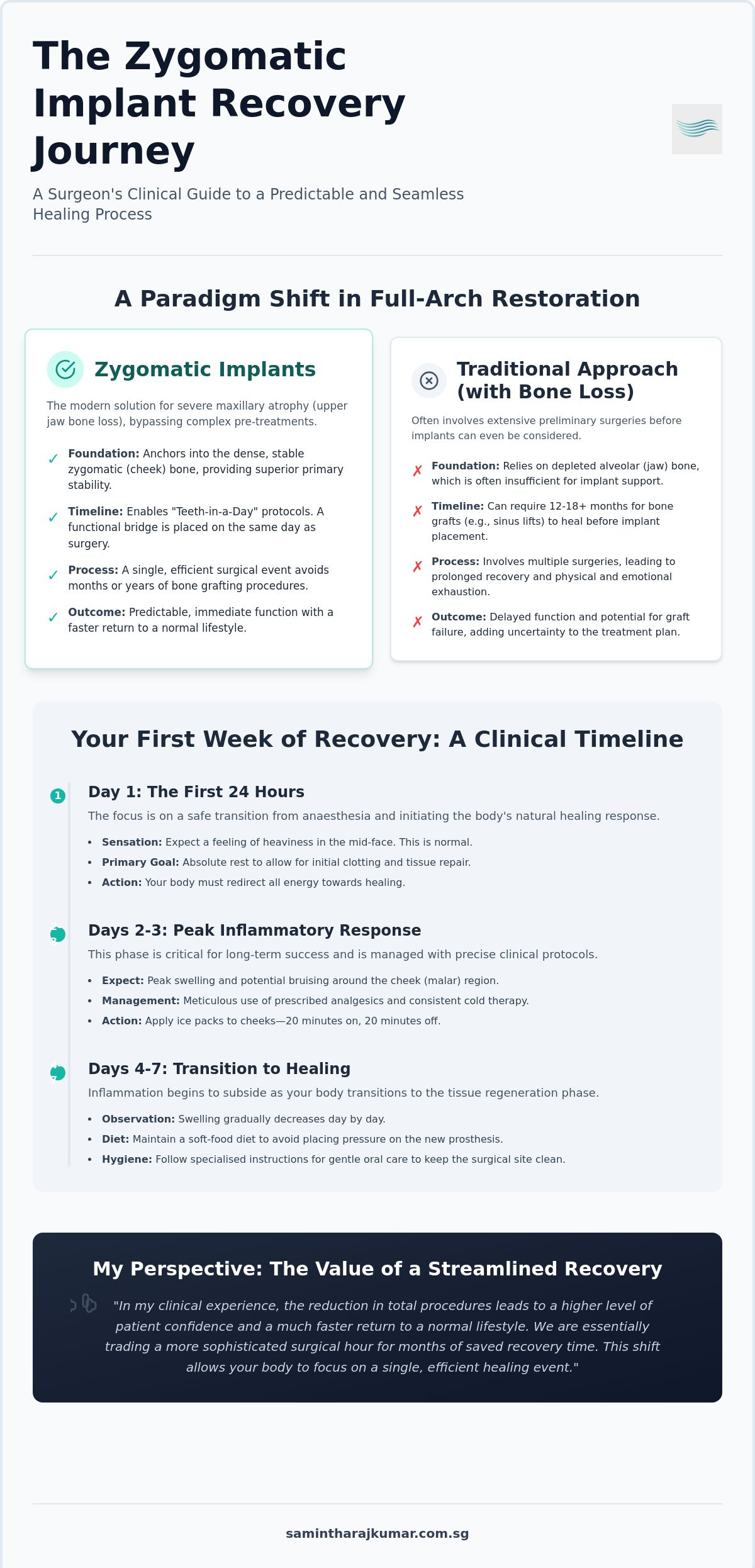
The Zygoma implant acts as a structural bridge, bypassing the need for extensive bone grafting. This is a critical distinction in my clinical experience. Traditional protocols often require months, or even years, of "pre-treatment" through sinus lifts and bone grafts before an implant can even be placed. By utilizing the zygomatic bone, we compress this timeline significantly. This synergy is what allows us to offer "Teeth in a Day," providing you with a functional, fixed prosthesis immediately after surgery.
To better understand the immediate impact of this protocol, watch this helpful video showing a patient just days after their procedure:
Why the Zygomatic Bone is the Gold Standard for Support
The zygoma possesses a unique cortical density that far exceeds the softer, cancellous bone often found in a depleted maxilla. This hardness provides what we call "primary stability," which is the mechanical grip required to support a bridge right away. As a clinician and founder, I prioritise this stability because it facilitates immediate loading. Choosing this route over multi-stage grafting means you avoid the physical and emotional exhaustion of multiple surgeries, allowing your body to focus on a single, efficient healing event.
Zygomatic vs. Traditional Implant Recovery
It is important to distinguish the zygomatic implants recovery journey from that of standard implants. While the initial surgery is more complex from a technical standpoint, the long-term healing is often more predictable. Because we are not waiting for a bone graft to "take" or integrate, we eliminate one of the most common points of failure in complex cases. You will experience fewer surgical interventions overall. In my experience, this reduction in total procedures leads to a higher level of patient confidence and a much faster return to a normal lifestyle. We are essentially trading a more sophisticated surgical hour for months of saved recovery time.
The Recovery Timeline: What to Expect in the First Seven Days
The first week of your zygomatic implants recovery is a period of significant biological activity. It's the foundation upon which your long-term success is built. Immediately following surgery, the focus is on a safe transition from sedation or general anaesthesia. You'll likely feel a sense of heaviness in the mid-face. This is normal. In my clinical experience, the most successful recoveries begin with a commitment to absolute rest in the first 24 hours. Your body needs to redirect its energy toward the initial stages of clotting and tissue repair.
Days two and three typically represent the peak of the inflammatory response. You'll notice swelling and perhaps some bruising around the malar (cheek) region. This is distinct from standard implants because the surgical site is higher in the facial structure. While clinical studies often highlight high zygomatic implant success rates, those outcomes are underpinned by meticulous care during these first few days. We manage this phase with a combination of prescribed analgesics and cold therapy.
Immediate Post-Operative Care (Days 1-3)
Ice packs are your primary tool. Apply them to the cheeks for 20 minutes on and 20 minutes off. This simple action significantly mitigates malar swelling. Pain management is a balance. We aim for comfort without over-sedation. As a clinician and founder, I view rest as a non-negotiable component of early biological healing. It's not just about comfort; it's about giving your immune system the space to work during this critical window.
By days four to seven, you'll feel a shift. The acute discomfort begins to wane. Swelling starts to subside. This is the phase of initial tissue stabilisation. However, your diet remains the most critical factor. A strict "no-chew" protocol is essential for at least the first few months. Even though your "Teeth in a Day" look and feel real, the implants are still integrating with the bone. Forceful chewing can disrupt this delicate process and compromise the structural integrity of the restoration.
The Transition to Initial Stabilisation (Days 4-7)
Monitor your surgical sites daily. Normal healing involves pink, healthy-looking gums, even if they're slightly tender. You can gradually reintroduce light activity, such as short walks. Avoid anything that significantly elevates your heart rate, as increased blood pressure can trigger secondary swelling. For oral hygiene, avoid vigorous brushing near the sutures. Instead, use a gentle prescribed rinse to keep the area clean without mechanical irritation. When we discuss your comprehensive treatment plan, we precisely tailor these post-operative steps to your unique physiological needs.
Navigating the Phases of Healing: From Soft Tissue to Osseointegration
In my clinical experience, the transition from acute healing to biological integration is where the true success of a restoration is solidified. Once you move past the first week of your zygomatic implants recovery, the focus shifts from managing inflammation to supporting the "silent" phase of osseointegration. Between weeks two and six, the primary objective is soft tissue closure. During this time, the specialised sutures used in my practice begin to dissolve, and the surgical incisions in the palate and gingiva achieve a stable seal. This protective barrier is essential to prevent oral bacteria from interfering with the underlying bone-to-implant interface.
From a biological perspective, months two through six represent the most critical window for structural permanence. While you will already be enjoying the aesthetics of your new smile, the titanium implants are still undergoing a complex cellular fusion with the zygomatic bone. I view the temporary bridge not merely as a cosmetic placeholder, but as a strategic splint. It distributes biting forces evenly across the framework, ensuring that no single implant is overloaded while the bone is still maturing around the threads of the fixture.
The Science of Osseointegration in the Cheekbone
Osseointegration in the zygoma is a remarkable process. Because the cheekbone is composed of high-density cortical bone, it provides what we call superior "primary stability." This mechanical grip is immediate, which is the foundational requirement for the teeth in a day procedure explained in our clinical protocols. Over the following months, this mechanical grip is replaced by "secondary stability" as new bone cells, or osteoblasts, weave directly into the microscopic pores of the implant surface. This transition is why maintaining a soft diet is non-negotiable; we must protect this delicate cellular bridge as it hardens into a permanent bond.
Lifestyle Adjustments During the Integration Phase
As a clinician and founder, I emphasise that your lifestyle choices directly dictate the quality of this bone fusion. I implement a strict three-month rule regarding smoking, as nicotine constricts the micro-vasculature essential for delivering nutrients to the healing bone. Additionally, protecting the All-on-4 framework from excessive occlusal forces is vital. If you have a history of bruxism (teeth grinding), we may provide a specialised night guard to shield the integration site. I prioritise a comprehensive six-week clinical review to monitor this progress, as this allows me to verify that the soft tissue is healthy and the prosthesis remains perfectly seated.
While the vast majority of my patients experience a smooth journey, you should remain vigilant for specific red flags. Please contact my surgical team if you experience:
A sudden increase in pain after the first two weeks.
Persistent numbness that does not show signs of resolving.
A sensation of movement or "clicking" in the bridge.
Unusual discharge or a foul taste near the implant sites.
The best outcomes begin with understanding the root cause of healing, ensuring every patient feels secure as they transition from clinical care to functional independence.
Essential Post-Operative Protocols for Long-Term Implant Success
Achieving a beautiful aesthetic result is merely the first milestone of your zygomatic implants recovery. True success is measured by the longevity and functional excellence of the restoration over the coming decades. In my clinical experience, the transition from a surgical patient to a maintenance-focused individual is the most critical shift you will make. We aren't just restoring teeth; we're building a structural foundation that requires precise, ongoing care to remain stable within the unique environment of the mid-face.
Systemic health also plays a quiet yet vital role in implant longevity. Factors such as uncontrolled diabetes or poor vascular health can impact how your body maintains the bone around the implants. I often tell my patients that their oral health is a reflection of their overall wellness. We must also consider the mechanical stresses of your bite. If the alignment is even slightly off, it creates uneven pressure that can lead to mechanical fatigue of the titanium or the prosthetic material itself. My team and I meticulously monitor these forces during your follow-up appointments.
The Hygiene Protocol for Full-Mouth Rehabilitation
Traditional flossing is physically impossible for a fixed full-arch bridge. Because the bridge sits closely against the gum tissue, you need tools that can reach beneath the framework. I recommend a combination of high-quality water flossers and specialised interproximal brushes. These instruments allow you to flush out microscopic debris and biofilm that could otherwise lead to inflammation. Maintaining this pristine environment is essential for preventing facial collapse with dental implants, as healthy bone levels are the only way to preserve your natural face shape and structural volume.
Monitoring Structural Integrity
Approximately six months after your initial surgery, we move into the final prosthesis phase. This is when the biological healing of your zygomatic implants recovery is fully complete, and we can refine the aesthetics and function with absolute precision. My clinical protocol includes annual radiographic assessments to peer beneath the surface. We check the bone density around the zygomatic fixtures and ensure that every screw and component remains at peak performance. These reviews allow us to make minor bite adjustments as your jaw settles into its new, healthy position. If you have questions about the long-term care of your restoration, you can speak with our clinical coordinators to understand our dedicated maintenance programmes.
My Perspective: Why Precision in Recovery Defines the Final Aesthetic Outcome
In my clinical experience, the success of a complex surgery is often measured by the surgeon in millimetres and degrees of torque. However, as a clinician and founder, I believe the true metric of success is the restoration of a patient's spirit. The journey through zygomatic implants recovery is as much an emotional process as it is a biological one. Patients often arrive at my practice feeling a sense of vulnerability, having lived with the functional and social limitations of severe bone loss. Watching that vulnerability transform into functional confidence as the healing progresses is the most rewarding aspect of my work.
I view every patient through a holistic lens. We are not merely treating the bone; we are treating a person who desires to return to a life of spontaneity and health. Beyond simple tooth replacement, these protocols are a fundamental pillar of modern cosmetic dentistry. By providing deep structural support where it was previously absent, we can restore the mid-facial volume that often collapses with age and tooth loss. This synergy between surgical precision and aesthetic rejuvenation allows us to achieve a legacy of health that lasts for decades.
The Surgeon-Patient Partnership
Transparent communication during recovery reduces patient anxiety by providing a predictable map for the weeks ahead. I've always maintained that the surgery is only half of the equation; the other half is the meticulous follow-up and the partnership we build. My commitment to global standards means that every protocol we use is backed by international research and refined through years of specialist practice. Zygomatic success is ultimately the intersection of biological precision and a patient’s commitment to a restorative lifestyle.
The Future of Full-Mouth Rehabilitation
As we look toward the future of full-mouth rehabilitation, we are increasingly integrating AI-assisted diagnostics to plan for even more predictable recoveries. These innovations allow us to map the zygomatic architecture with unprecedented accuracy, ensuring that the inflammatory response is minimised and the long-term impact on facial harmony is maximised. We are entering an era where structural rejuvenation is no longer an accidental byproduct of dental work, but a planned and intentional outcome of visionary implantology. I am proud to lead an institution that prioritises these advancements, always keeping the patient’s long-term well-being at the centre of our innovation. The best outcomes begin with understanding the root cause.
A Vision for Comprehensive Structural Renewal
I've dedicated my career as a clinician and founder to mastering the complex Zygomatic and Pterygoid systems because they offer a lifeline to those who thought their dental journey had reached a dead end. By understanding the biological rationale behind these protocols, we move away from the frustration of failed bone grafts toward a predictable path of restoration. Throughout the zygomatic implants recovery journey, success is built on the foundation of international standards and meticulous follow-up. We don't just aim for functional teeth; we aim for a profound personal impact that lasts a lifetime.
My clinical philosophy at Nuffield Dental is rooted in the belief that every patient deserves a bespoke path to wellness. Whether it's the immediate stability of the "Teeth in a Day" protocol or the long-term discipline of specialised hygiene, every step is a deliberate move toward total oral rehabilitation. The best outcomes begin with understanding the root cause. Explore our approach to total rehabilitation.
Your journey toward a renewed quality of life is a partnership I am honoured to lead. I look forward to helping you rediscover the confidence that comes with a healthy, functional, and beautiful smile.
Frequently Asked Questions
How much pain should I expect after zygomatic implant surgery?
You can expect moderate discomfort that is well-managed with the analgesics I prescribe. Surprisingly, many patients report less pain than they anticipated because the zygomatic bone has fewer sensory nerves than the alveolar bone. The initial 72 hours are the most sensitive, but this quickly transitions into a dull awareness. My goal is always to ensure your comfort remains a priority throughout the initial stages of healing.
What can I eat during the first few weeks of zygomatic recovery?
You must adhere to a strict "no-chew" soft diet for the first three months of your zygomatic implants recovery. This includes nutrient-dense foods like protein shakes, blended soups, and soft mashes. Avoiding mechanical stress is vital while the implants are fusing with your bone. I often suggest that if you can't mash the food with a fork, it's not yet safe to consume.
When can I return to work after the procedure?
Most patients feel ready to return to sedentary work within 7 to 10 days. If your role involves significant physical exertion or heavy lifting, I recommend waiting at least two weeks. It's important to keep your heart rate stable during the early phase of healing. Elevating your blood pressure too soon can lead to secondary swelling or prolonged bruising in the mid-face.
Is facial bruising normal after zygomatic implants?
Facial bruising is a normal and expected part of the recovery process. Because we are working with the zygomatic bone, bruising often appears around the cheeks and may even migrate toward the lower eyelids. This isn't a cause for alarm. In my experience, these marks typically peak around day three and fade completely within 10 to 14 days as your body heals.
How do I clean my zygomatic implants during the healing phase?
You should use a gentle, prescribed antimicrobial rinse for the first two weeks rather than mechanical brushing. Once the initial tissue closure is complete, I recommend transitioning to a water flosser and specialised interproximal brushes. These tools are essential for flushing out debris from beneath the bridge. Maintaining a pristine environment around the fixtures is the best way to ensure long-term biological stability.
Can I smoke after getting zygomatic implants?
I strongly advise against smoking for at least three months following your procedure. Nicotine is a potent vasoconstrictor that reduces the oxygen and nutrient supply to your healing bone. This significantly increases the risk of implant failure. From a biological perspective, giving up smoking is one of the most impactful decisions you can make to protect your investment and ensure a successful outcome.
What happens if I accidentally bite something hard during recovery?
If you accidentally bite something hard, contact my clinical team immediately for a review. While a single incident doesn't always lead to failure, it can cause micro-movements that disrupt the osseointegration process. We'll want to verify the stability of the temporary bridge and ensure no components have been loosened. Early intervention is always the safest course of action to protect the structural integrity.
How long do zygomatic implants last if properly maintained?
Zygomatic implants are designed to be a lifelong solution if they are properly maintained. Clinical data consistently shows survival rates between 94% and 99% over long-term follow-up periods. Their longevity depends on your commitment to professional hygiene appointments and meticulous home care. When we treat the root cause of bone loss correctly, these implants provide a permanent foundation for a functional, confident smile.


Comments