
Zygomatic Implants Recovery Process: A Specialist Surgeon’s Perspective on Total Rehabilitation
- Dr Samintharaj Kumar

- Aug 17
- 13 min read
The most common misconception about zygomatic surgery is that a more complex anchorage necessarily leads to a more painful recovery. In reality, the remarkable density of the cheekbone often facilitates a smoother zygomatic implants recovery process than many expect, allowing for immediate functional restoration through our Teeth in A Day protocol. I recognise that the thought of surgery in the mid-face area often triggers anxiety about invasive procedures and swelling. It's a significant step, and your concerns about how this journey differs from standard dental protocols are entirely valid.
In my clinical experience, a successful outcome relies as much on the recovery phase as it does on surgical precision. This article provides a comprehensive look at the clinical journey, offering a specialist’s perspective on the critical six-month healing timeline. You'll learn how we manage discomfort through advanced clinical protocols and how you can support your own biological healing to ensure a seamless transition to your new, permanent smile. My goal is to replace your apprehension with the confidence that comes from a clear roadmap to total rehabilitation.
Table of Contents
Beyond Traditional Bone Grafting: Why Zygomatic Implants Change the Recovery Narrative
The Zygomatic Implants Recovery Timeline: What to Expect in the First 180 Days
My Perspective: A Holistic Approach to Post-Surgical Biological Healing
Addressing Potential Complications and the Safety of Zygomatic Protocols
The Long-Term Impact: Life After Total Full-Mouth Rehabilitation
Beyond Traditional Bone Grafting: Why Zygomatic Implants Change the Recovery Narrative
In my clinical experience, patients arriving at my practice with severe bone loss are often weary. They've been told by generalist practitioners that they aren't candidates for traditional implants or that they must endure years of invasive bone grafting before they can even consider a permanent smile. This is where the Zygoma implant fundamentally changes the recovery narrative. Rather than attempting to rebuild a foundation that has already resorbed, we look to a more predictable, orthopaedic-grade solution.
A zygomatic implant is a specialised fixture, significantly longer than a standard implant, designed to anchor directly into the zygomatic bone, commonly known as the cheekbone. This bone is remarkably dense and remains stable regardless of how much jawbone has been lost. By using this as our foundation, we can provide a definitive solution for the atrophic maxilla, which is the clinical term for a severely receded upper jaw. The most profound clinical consequence of this choice is the time saved. Patients avoid the six to nine-month waiting period required for bone grafts to heal and mature, meaning the zygomatic implants recovery process begins with functional teeth rather than a series of preparatory surgeries.
Addressing the limitations of the atrophic maxilla
When teeth are lost, the alveolar bone of the upper jaw no longer receives the mechanical stimulation it needs to maintain its density. Over time, this leads to significant bone resorption. Traditional implants often fail in these cases because the foundation is simply too thin or porous to support the biting forces of a full arch. As a clinician and founder, I've seen how this functional failure impacts a patient's confidence and systemic health.
By utilising the cheekbone, we bypass the need for sinus lift surgery for dental implants. In traditional protocols, a sinus lift is often required to create enough vertical space for an implant, but it adds complexity and significant downtime to the healing journey. Zygomatic protocols allow us to navigate around the sinus cavities entirely. This approach ensures that the patient's recovery is streamlined, moving directly from the surgical phase to the restorative phase without the biological delays associated with grafting.
The biological advantage of cortical bone anchoring
From a biological perspective, the zygomatic bone is composed of high-density cortical bone. Unlike the softer, cancellous bone found in the jaw, cortical bone is incredibly resistant to resorption. This inherent stability is the reason why the teeth in a day procedure explained in our clinical guides is so successful for zygomatic patients. We aren't relying on the variable quality of a healing jaw; we're anchoring into a permanent, solid structure.
Primary stability in zygomatic surgery refers to the high level of mechanical friction and "lock" achieved at the moment of implant placement within the dense zygomatic bone, which is essential for immediate functional loading. This immediate stability allows us to fit a fixed provisional bridge on the very same day. It's a transformative experience for the patient. They leave the clinic with a secure set of teeth, which not only aids in their psychological recovery but also begins the process of functional rehabilitation immediately.
The Zygomatic Implants Recovery Timeline: What to Expect in the First 180 Days
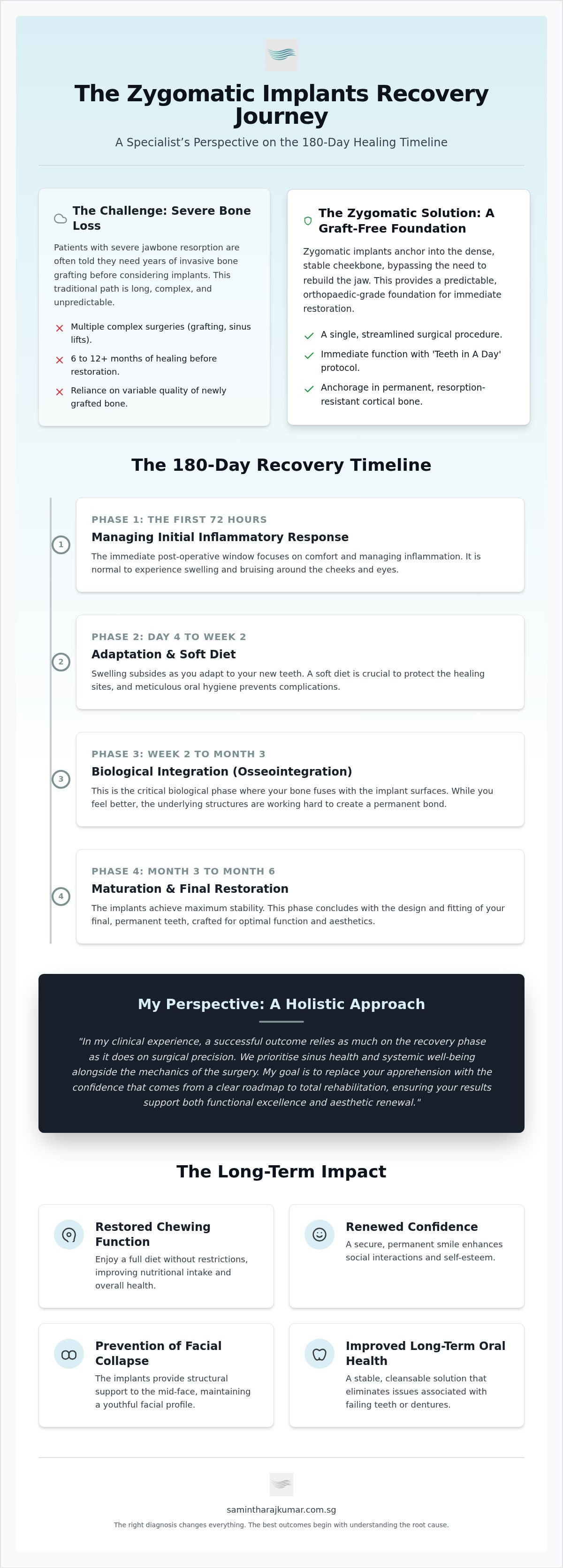
Recovery is not a passive waiting period; it is a phased progression towards total oral rehabilitation. In my clinical experience, the zygomatic implants recovery process is often more predictable than traditional grafting because we are working with the stable, non-resorbing bone of the cheek. We divide this journey into three distinct phases to ensure both your comfort and the long-term success of the restoration.
The first 72 hours: Managing initial inflammatory responses
The immediate post-operative window is dedicated to managing inflammation. Because zygomatic implants are anchored in the mid-face region, it is entirely normal to experience swelling and bruising around the cheeks and occasionally near the lower eyelids. I prescribe specific clinical protocols for pain management and infection prevention that typically include a course of antibiotics and anti-inflammatories.
During these first few days, a 'no-chew' liquid diet is non-negotiable. This isn't just about comfort; it's about protecting the surgical sites from micro-movements that could interfere with early healing. I advise patients to focus on nutrient-dense soups and smoothies to support their systemic recovery without placing any mechanical stress on the provisional bridge.
Weeks two to six: Transitioning to functional adaptation
By the second week, we typically remove any remaining sutures and perform our first comprehensive assessment of the soft tissue health. Most patients find that the initial swelling has subsided significantly, allowing them to begin adapting to the feel of their provisional bridge. You may notice subtle changes in your speech or the way your lips rest; this is a natural part of the functional adaptation phase.
Whilst you can begin transitioning to very soft foods, you must remain vigilant for red flags. Persistent numbness beyond the first week, unusual discharge, or any perceived mobility of the bridge are signs that require an immediate surgical review. If you have questions about your progress, an expert clinical assessment is the most reliable way to ensure your recovery remains on track.
Months three to six: Achieving definitive biological integration
The intermediate phase is where the science of osseointegration truly takes place. Over these months, the bone cells of the zygoma bond to the titanium surface of the implant, creating a permanent foundation. This process is similar to what occurs with all-on-4 dental implants, though the density of the cheekbone provides a unique level of stability.
We use this time to plan your final restorative phase. Once we are confident that biological integration is complete, we transition you from the provisional acrylic bridge to your definitive, high-strength prosthesis. Maintaining a soft-food diet until this final fitting is vital to prevent overloading the implants during their most critical healing window. The right diagnosis and a disciplined recovery phase change everything, leading to a result that is as durable as it is aesthetic.
My Perspective: A Holistic Approach to Post-Surgical Biological Healing
As a clinician and founder, I have always maintained that the most successful surgical outcomes are rooted in a deep understanding of the patient's systemic health. We don't simply treat an atrophic jaw; we treat a person whose oral health is inextricably linked to their biological well-being. In my clinical experience, the zygomatic implants recovery process is most effective when we address the underlying reasons for bone loss, whether that stems from long-term tooth absence, trauma, or metabolic factors.
My philosophy centres on a biological dentistry lens. This means we integrate advanced technology, such as AI-assisted diagnostics and 3D CBCT imaging, to precisely monitor how the complex implant system interacts with your unique anatomy. By using AI to analyse bone density and healing patterns, we can preemptively adjust our post-operative protocols. I also prioritise patient comfort through meticulous surgical planning and advanced sedation. A patient who is relaxed and well-cared for during surgery enters the recovery phase with lower cortisol levels, which is a fundamental requirement for optimal tissue repair.
The role of nutrition in surgical wound healing
From a biological perspective, surgical success is heavily dependent on the body's internal chemistry. I've found that Vitamin D3 and K2 levels are critical for bone-to-implant bonding, as these nutrients regulate the calcium metabolism necessary for osseointegration. If a patient is deficient, the bone may struggle to mineralise effectively around the titanium surface, potentially compromising the stability of the fixture.
Systemic inflammation is another significant hurdle. Chronic inflammation can delay tissue repair and increase the risk of peri-implant issues during the early stages of healing. I often advise a protein-rich diet during the recovery phase because it supports the essential collagen formation in the gums required to create a healthy, protective seal around the implant abutments. High-quality nutrition acts as a biological catalyst, ensuring that the cellular response to surgery is one of rapid repair rather than prolonged stress.
Innovative clinical follow-up protocols
Our commitment to your recovery extends far beyond the operating theatre. We use high-resolution digital scans to track the stability of the implants over time, allowing us to see what the naked eye cannot. This data-driven approach ensures that the transition from a provisional bridge to a definitive prosthesis is based on verified biological readiness rather than just a fixed timeline.
I also insist on a personalised hygiene programme tailored specifically to full-mouth bridges. Cleaning around zygomatic fixtures requires a different technique than natural teeth, and our therapists are trained to mentor you through this process. During our post-operative consultations, I maintain a steady, calm rhythm. This deliberate pace is designed to lower emotional barriers and replace anxiety with the quiet confidence that you are in capable, experienced hands.
Addressing Potential Complications and the Safety of Zygomatic Protocols
Transparency is the cornerstone of the trust I build with my patients. While the zygomatic implants recovery process is generally predictable, understanding potential risks is an essential part of informed consent. In my clinical experience, the success rates of zygomatic protocols are exceptionally high. Global clinical guidelines and studies often report success rates between 95% and 98.5%. This compares favourably to traditional bone grafting, which can be more variable depending on the patient's biological response to the graft material and the quality of the donor bone.
Managing the maxillary sinus during recovery
Because zygomatic implants are anchored in the cheekbone, they naturally sit in close proximity to the maxillary sinus. Some patients may experience temporary congestion or a sensation of sinus pressure during the initial weeks of healing. This is a common inflammatory response rather than a sign of failure. To protect the sinus membrane during placement, I utilise meticulous clinical techniques that prioritise anatomical integrity and minimise disruption to the sinus cavity.
Post-operative care is vital for maintaining sinus health. I provide clear instructions to avoid activities that create significant pressure changes, such as vigorous nose-blowing or using straws, for at least fourteen days. These simple precautions prevent the displacement of the biological seal and ensure the sinus remains clear as the surrounding tissues stabilise. If a patient has a history of chronic sinusitis, we address this during the planning phase to ensure the most secure outcome.
The importance of specialist surgeon qualifications
Zygomatic surgery is a sophisticated procedure that requires a higher tier of maxillofacial expertise than standard implantology. The proximity to vital structures, including the sinuses and facial nerves, means there is no room for a 'generalist' approach. My extensive background in complex wisdom tooth extraction and oral surgery provides the foundational precision required to navigate these anatomical pathways safely. We use 3D CBCT diagnostics to map the precise path of every implant, ensuring we achieve primary stability without compromising sensory function.
Choosing a practitioner who specialises in these systems significantly reduces the risk of nerve interference and long-term complications. A specialist understands the nuances of the atrophic maxilla and how to manage the unique stresses placed on zygomatic fixtures. If you are considering this life-changing procedure, ensuring you are in the hands of a qualified specialist surgeon is the most important decision you will make for your safety. The right diagnosis and surgical mastery don't just solve the problem; they protect your future quality of life.
The Long-Term Impact: Life After Total Full-Mouth Rehabilitation
The right diagnosis changes everything. In my clinical experience, the transition from functional failure to aesthetic renewal is the most rewarding part of the zygomatic implants recovery process. Once the initial 180-day healing window has passed, patients often find that their focus shifts from the mechanics of surgery to the reality of a restored life. This isn't merely about replacing missing teeth; it's about reclaiming the structural integrity of the face and the confidence that comes with permanent stability.
For many, the journey to this point was marked by the persistent fear of loose dentures or the discomfort of failing bridges. Moving beyond those anxieties requires more than just a surgical procedure; it requires a commitment to long-term well-being. From a biological perspective, the completion of your rehabilitation marks the end of bone resorption in the upper jaw and the beginning of a new chapter where your oral health supports your systemic vitality.
Restoring facial aesthetics and structural harmony
One of the most significant clinical benefits of this protocol is its role in preventing facial collapse with dental implants. When the maxilla is severely atrophic, the mid-face often loses its volume, leading to a sunken appearance and the premature formation of deep lines around the mouth. By anchoring into the zygoma and providing a customised, high-strength prosthesis, we effectively replace the missing hard and soft tissue volume.
This structural support restores the natural fullness of the upper lip and provides a foundation for facial rejuvenation. We design every prosthesis to achieve structural harmony, ensuring the teeth are positioned to support your unique facial contours. The result is a natural-looking smile that doesn't just look healthy but feels like an authentic part of your identity. This aesthetic renewal is only possible because we've built the restoration on a foundation of orthopaedic-grade stability.
The psychological shift to functional confidence
The transformative power of a stable, permanent set of teeth cannot be overstated. I've seen patients who previously avoided social situations or specific foods undergo a profound psychological shift once their rehabilitation is complete. Eliminating the fear of a prosthesis shifting during a conversation or a meal allows you to engage with the world on your own terms again. You can eat, speak, and smile without a second thought.
As a clinician and founder, I believe the best outcomes begin with a foundation of trust and expert care. The journey through complex surgery is significant, but the reward is a life free from the limitations of dental failure. Total rehabilitation is a legacy of health that you carry forward. It's a testament to the power of modern medicine when it's applied with meticulous precision and a patient-centred philosophy. The right diagnosis and a specialist's perspective truly change the trajectory of your quality of life.
Reclaiming Functional Excellence and Aesthetic Renewal
We have navigated the complex clinical journey from the initial inflammatory phase to the definitive achievement of biological integration. In my clinical experience, the zygomatic implants recovery process represents a transformative shift in how we treat the atrophic maxilla, allowing us to bypass the significant delays and unpredictability of traditional bone grafting. By anchoring into the dense cortical bone of the cheek, we establish a secure foundation that supports immediate functional restoration and long-term structural harmony.
As a clinician and founder, I remain committed to global standards in oral and maxillofacial surgery, ensuring your safety through meticulous planning and AI-assisted diagnostics. My expertise in complex Zygomatic and Pterygoid protocols is focused on your total rehabilitation and the lasting impact on your systemic health. The best outcomes begin with understanding the root cause. Explore our approach to total rehabilitation.
The journey to a permanent smile is a profound commitment to your long-term well-being. You deserve a foundation that reflects your vitality and a result that allows you to engage with the world with absolute confidence. The right diagnosis truly changes everything.
Frequently Asked Questions
How much pain should I expect during zygomatic implant recovery?
Most patients find that post-operative discomfort is well-managed with the prescribed clinical protocols I provide. While the procedure is extensive, the zygomatic bone itself has fewer sensory nerve endings than the jawbone. You'll likely experience a sensation of tightness or pressure in the cheeks for the first few days. I use advanced sedation during surgery to ensure a comfortable experience, and we follow up with a precise pain management plan.
When can I return to work after zygomatic implant surgery?
I usually recommend that patients take at least seven to ten days off work to focus on their initial healing. The first three days involve the most significant swelling, which can affect your speech and appearance. If your role involves heavy lifting or intense physical activity, you may need to wait up to two weeks. Every zygomatic implants recovery process is unique, so we'll discuss your specific professional requirements during your consultation.
Are zygomatic implants more dangerous than traditional dental implants?
Zygomatic surgery is more complex because it involves navigating near the maxillary sinuses and facial nerves. However, in the hands of a specialist surgeon, it is a highly safe and predictable procedure. We use 3D CBCT imaging and AI-assisted diagnostics to map your anatomy with sub-millimetre precision. This meticulous planning minimises risks, making it a definitive solution for those with severe bone loss who cannot support traditional implants.
What can I eat during the first few weeks of zygomatic recovery?
For the first three to five days, a strictly liquid diet is essential to prevent micro-movements of the provisional bridge. Think nutrient-dense smoothies, lukewarm soups, and protein shakes. After this initial window, you can transition to very soft foods that require no chewing, such as mashed avocado, scrambled eggs, or well-cooked pasta. Maintaining this discipline for the first few weeks is vital to ensure the biological bonding of the implants.
Will I have bruising on my face after the procedure?
It is normal to experience some degree of bruising and swelling in the mid-face region, occasionally extending towards the lower eyelids. This is a natural inflammatory response to the surgical anchorage in the cheekbone. Most bruising peaks around the third day and begins to fade significantly by the end of the first week. I provide specific cold-compress protocols and anti-inflammatory guidance to help you manage these visible signs of healing effectively.
How do I clean my zygomatic implants during the healing phase?
During the first week, you'll use a prescribed antiseptic mouthwash to keep the surgical sites clean without physical agitation. Once the soft tissues have begun to stabilise, our hygiene team will teach you how to use specialised interproximal brushes and water flossers. Cleaning a full-mouth bridge requires a different technique than natural teeth. We provide a personalised programme to ensure you can maintain the health of your implants throughout the zygomatic implants recovery process.
Can zygomatic implants fail, and what happens if they do?
While zygomatic implants have an exceptional success rate between 95% and 98.5%, biological failure can occasionally occur if osseointegration is interrupted. If an implant fails to bond, we first identify the root cause, such as systemic inflammation or mechanical overload. In many cases, the site can be treated and a new implant placed after a healing period. My focus as a clinician and founder is on long-term success through rigorous pre-surgical planning.
Is the recovery process different for ceramic vs titanium implants?
The fundamental timeline for bone bonding remains similar, but the biological response can vary. Titanium is the global standard for zygomatic protocols due to its incredible strength and long-term data. Ceramic implants are often favoured for their biocompatibility and aesthetic properties in standard cases, but for the complex loads of zygomatic rehabilitation, titanium offers the necessary structural resilience. We'll choose the material that best supports your specific anatomical needs and long-term health goals.


Comments